What Lagom does with a statement
The bank's own file goes in. Here is what comes out, what Lagom guessed, and what stays yours.
The file
Bring the file your bank makes for Quicken or QuickBooks. It ends in .qfx, .qbo or .ofx. Where to find it at your bank →
Why it matters: it is the bank's own record. It names the account, states the balance as of a date, and marks every line. So your next statement lands on the right account, your balances need no retyping, and a statement brought twice lands once.
A CSV is a spreadsheet of a statement: laid out differently by every bank, with no balance and no mark on each line. Nothing could tell a second download from a double charge. That is why Lagom reads QFX, not CSV. You download the file yourself. Lagom never connects to your bank.
What Lagom does with it
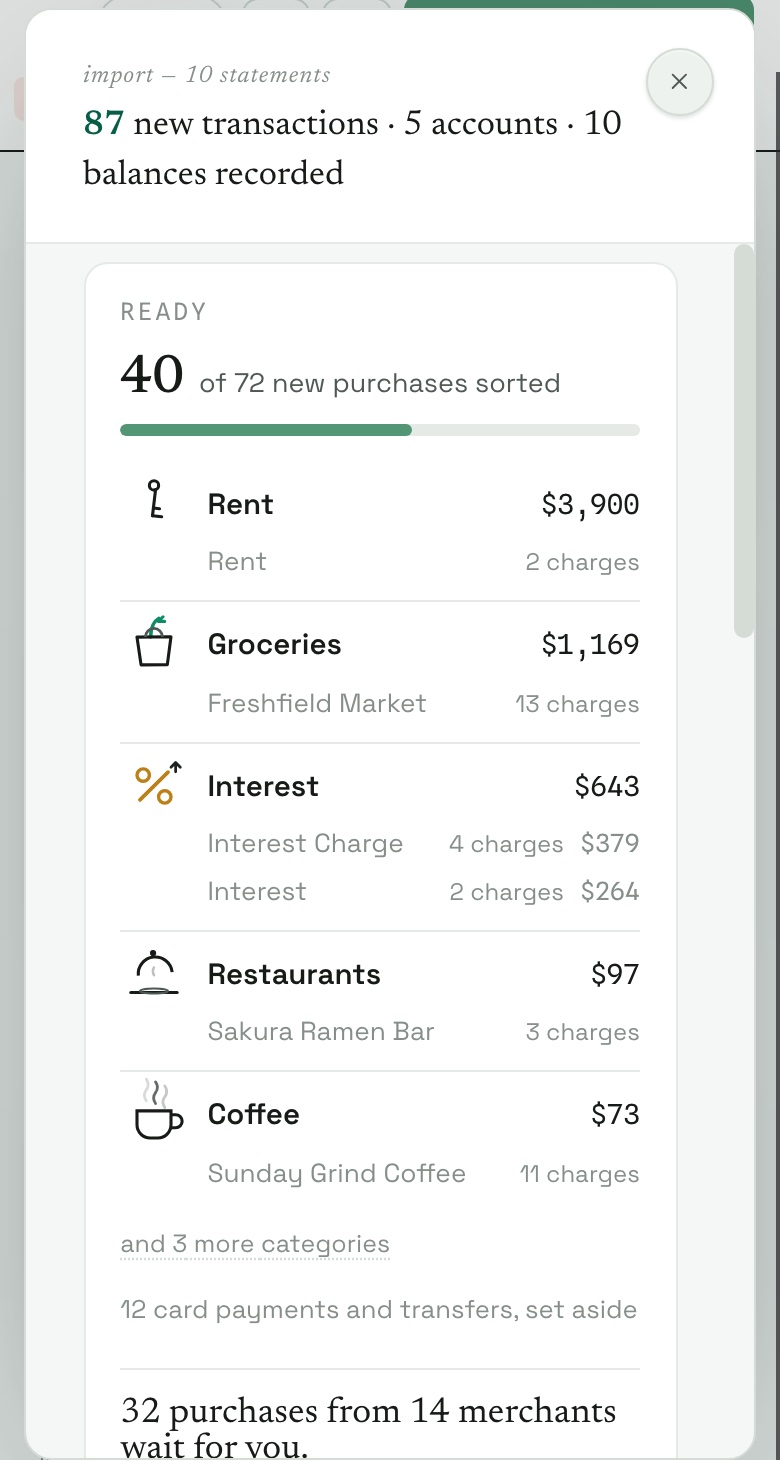
Right after the import, Lagom shows its work. What came in: how many transactions, which accounts, the balances recorded. Then the purchases by category, and how many wait for you.
Why it matters: you check the sorting before you trust the picture.
A line gets its category in this order:
- A rule you taught. Name a merchant once, and every statement after lands it the same way.
- The name itself. Lagom strips the bank's codes from the line and reads what is left: a grocer, a pharmacy, interest.
- A suggestion. For a merchant it cannot place, a service sees the merchant name with personal details masked. Never an amount, a date or an account number, and only while Suggest categories is on in Settings. A suggestion is marked as one until you confirm it.
Transfers and card payments are set aside as not spending, so paying a card never counts as a purchase.
You stay the judge
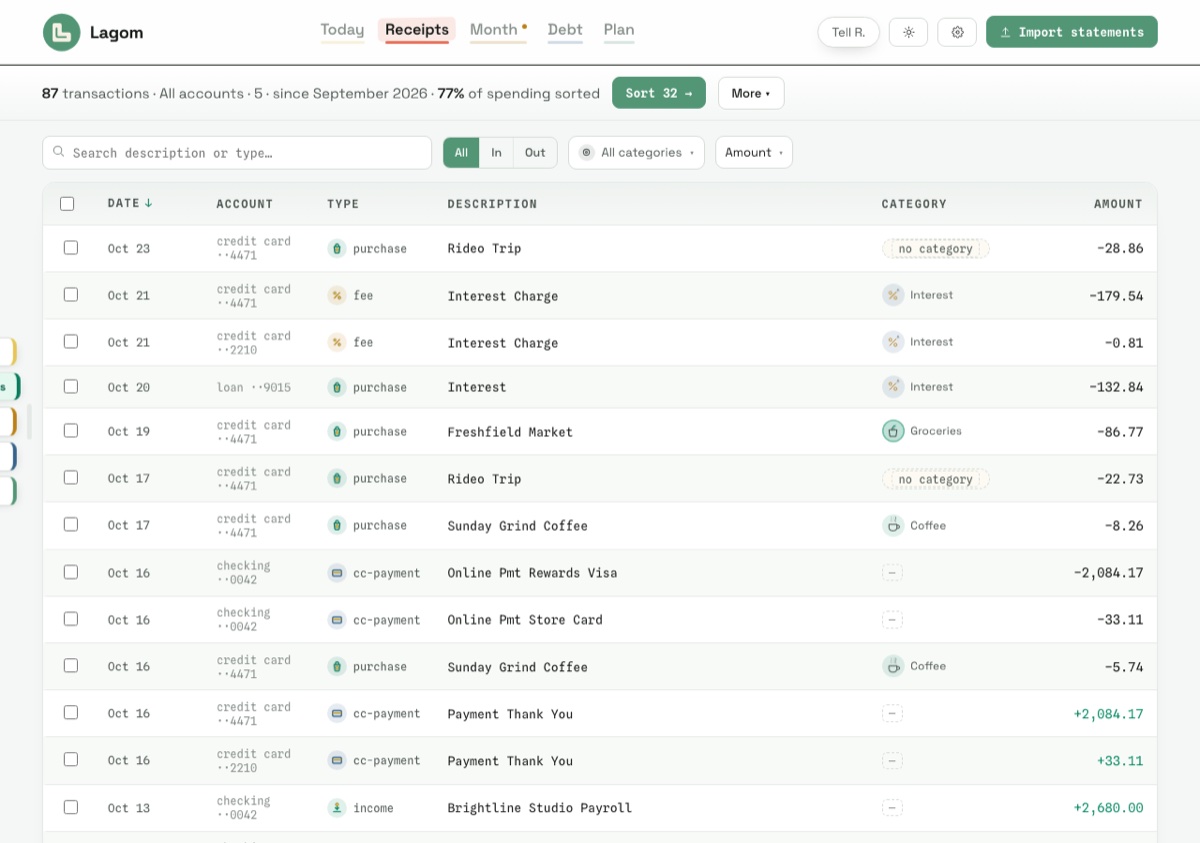
Every line on Receipts shows its category, or a dashed "no category". Tap it to pick another.
Sort → opens what is left in one place: the merchants that cost the most or come up most often first, a note where a name may be off, suggestions you reject with one tap, and the rules you have taught.
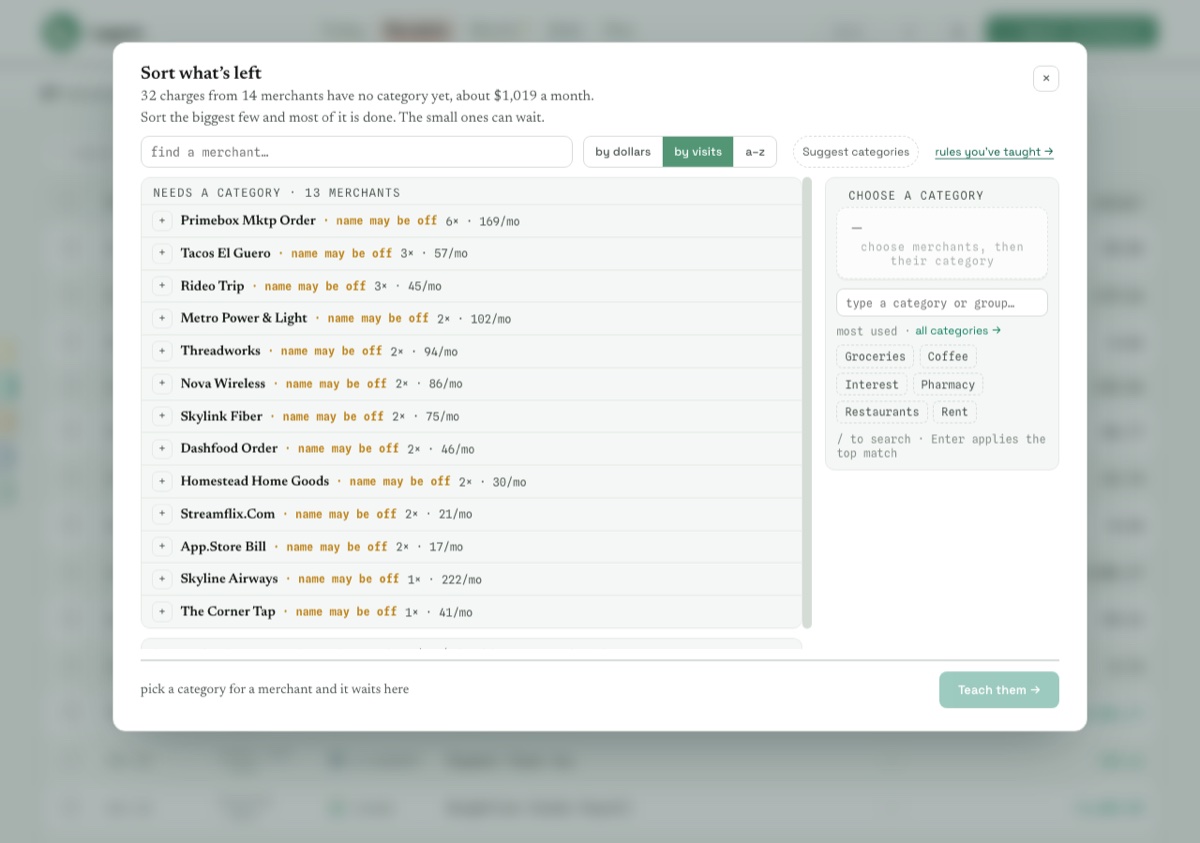
Why it matters: a picture is as honest as its corrections. Here a correction is one tap, and it is taught once.
Bring one statement. See where the month went.